

How to change oil in your car and truck for the results Oil changes are one of those simple jobs that can make a big difference in how well your car or truck runs over time. If you do them on schedule and do them right, your car or truck will start easier run smoother and last longer. But if you skip them for long rush through them or use the wrong parts you can end up with big problems like sludge, noisy engines, oil leaks and expensive repairs that seem to come out of nowhere. We like to keep things practical.
This guide will show you how to change your oil the way what to look out for in cars versus trucks and how to make oil changes part of your regular maintenance routine for the best results.
Why Oil Changes Are More Important Than You Might Think?
Motor oil does a lot more than just lubricate your engine. It also helps to carry heat from hot spots keeps contaminants from building up and protects the inside of your engine from corrosion. Over time the oil breaks down from the heat. It gets contaminated with things like combustion byproducts, moisture and fuel. Even if the oil looks okay when you check the dipstick, it can still be past its prime.
Trucks and work vehicles often have a time. They may be used for towing, idling or carrying loads, which can all shorten the life of the oil. Many modern vehicles have systems that calculate how long the oil will last based on how you drive. It is still a good idea to understand what is going on with your engine.
Picking The Right Oil And Filter (Without Overthinking It)
The best oil for your car or truck is the one that matches what the manufacturer recommends and what you need for your driving habits.
Check your owner’s manual or the oil cap to find out what viscosity you need, such as 0W-20 or 5W-30.
Then make sure you are using the standard, such as dexos or API SP. For people full synthetic oil is the way to go. It handles heat better lasts longer and works well in weather. The most important thing is to be consistent. Using the oil and changing it on time is better than using expensive oil and stretching out the time between changes.
How To Change Oil In A Car Or Truck Step By Step
A good filter with an anti-drain back valve can help reduce problems when you start the engine and keep the oil where it needs to be. Cheap filters can work, we have seen fewer problems when people use filters that are the same quality as the ones the manufacturer recommends. Changing your oil is not hard.
Drain The Old Oil The Clean Way
It is easy to make mistakes if you are not careful.
Here is how we recommend doing it for cars and light-duty trucks:
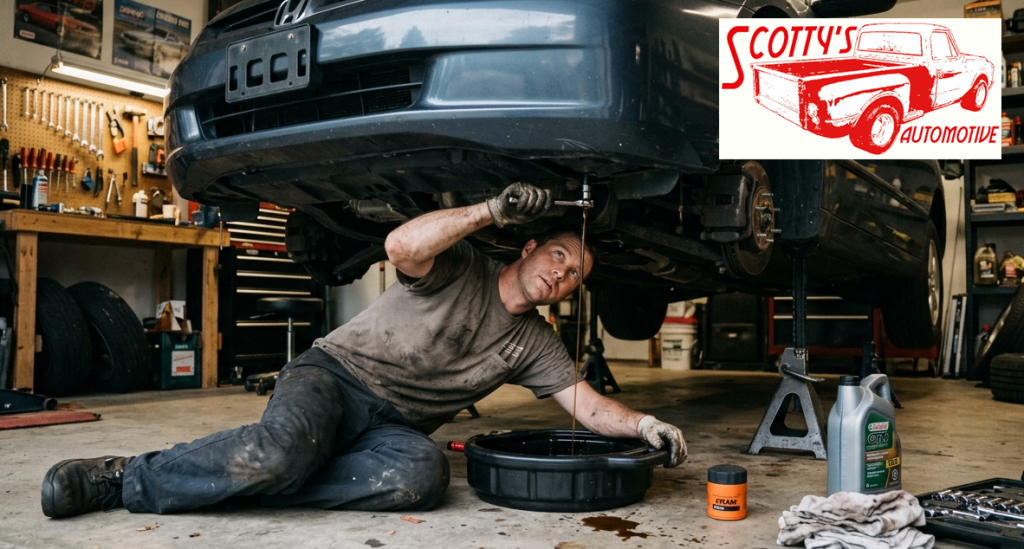
Start by driving your car or truck for a few minutes to warm up the engine. This will help the oil drain easily and carry away any contaminants. Park on a level surface set the parking brake. Use wheel chocks if you have them. If you need to lift your vehicle use ramps or a jack with jack stands. Never rely on a jack.
Make sure you have the socket for the drain plug, an oil drain pan, gloves, rags and a torque wrench if you can.
Refill With The Correct Amount And Verify Level
Pull out the dipstick a little bit. This will help the oil drain smoothly. Position the drain pan under the oil pan drain plug loosen the plug carefully and finish removing it by hand. Let the oil drain until it slows down to a few drips. While it is draining, take a look at the drain plug threads. See if there is an old crush washer. If there is replace it because it can cause leaks if it is not replaced. Before you put the plug in wipe the surface clean. Put the plug back in by hand first to avoid stripping the threads then tighten it to the torque.
Be careful not to overtighten or you can strip the threads and make a mess.
Replace the oil filter
Find the oil filter and position the drain pan underneath it.
Be ready for oil to spill out. Before you put the filter on make sure the old gasket is not stuck to the engine. This is a mistake that can cause leaks. Put a layer of new oil on the gasket then hand-tighten the filter until it stops. You can damage the gasket or make it hard to remove the filter next time. If the filter is in a position and you can fill it with oil before you put it on you can do that to reduce the time it takes for the engine to start.
If the filter is in a tight spot it might be better not to fill it until it is on the engine. Refill with the amount of oil and check the level Pour in the right amount of oil according to what the manufacturer recommends. If you are not sure start with a little less. Then check the dipstick to see if you need to add more.
Put the oil fill cap on start the engine and let it run for 30 to 60 seconds. Watch for the oil pressure light to go out then turn off the engine and wait a minutes for the oil to settle. Check the dipstick to make sure the level is right and look underneath the vehicle for any leaks around the drain plug and filter. If you see any oil dripping do not ignore it, fix it right away!
Reset The Oil Life Monitor And Record The Service
Reset the oil change reminder or oil life monitor according to what the manufacturer recommends, then write down the mileage and date so you can keep track of when you need to change the oil.
Car Vs. Truck Oil Changes: What’s Different
Most cars and trucks follow the basic steps for oil changes but trucks often have a few extra things to consider. Trucks may have oil capacities, different filter locations or skid plates that need to be removed.
If you tow things or drive in areas you may need to change your oil more often even if you use full synthetic oil.
Diesel trucks and some heavy-duty vehicles may have requirements, such as bigger filters or different oil standards.
If you have a diesel vehicle it is an idea to follow the manufacturers recommendations closely and consider having your oil analyzed if you drive a lot.
Building An Oil Change Routine That Gives The Best Results
A oil change routine is not just about following a schedule. It is about matching your driving habits and what you want to get out of your vehicle. For vehicles changing the oil every 5,000 to 7,500 miles is a good idea, especially if you use full synthetic oil. But if you drive a lot in temperatures tow things or drive in stop-and-go traffic you may need to change your oil more often. If your vehicle has an oil life monitor use it as a guide. Still check your oil level regularly. Some engines are designed to consume an oil and running low on oil can cause problems faster than using old oil to make it easy try to tie your oil changes to a simple checks.
Check your oil level, tire pressure, coolant level and windshield washer fluid and take a look underneath the vehicle for any leaks.
Common Oil Change Mistakes We See (And How To Avoid Them)
Even if you are careful, it is easy to make mistakes when you change your oil and most problems can be prevented!
One common mistake is using the oil viscosity or ignoring the manufacturers recommendations.
Another is overtightening the drain plug or filter which can cause stripped threads or leaks.
We also see people forget to replace the crush washer spill oil on suspension components or fail to check the oil level after the start. Sometimes the biggest problem is just not checking the level at all. If you ever notice a burning smell after an oil change check to see if there is oil spilled on the exhaust. If the oil pressure light stays on turn off the engine away and check the oil level and filter installation.
When You Should Let A Shop Like Ours Handle It Instead
There is nothing with doing it yourself but sometimes it makes sense to let a professional handle it. If your vehicle has a cartridge-style filter in a spot requires a skid plate removal or has limited access that makes spills likely it may be better to let a shop do it. The biggest reason is inspection. A good oil service includes a look, at your tires, brakes and fluids which can
Taking care of your car or truck is important if you want it to last a long time.
One of the things you can do for your car or truck is to change the oil regularly.
You should use the kind of oil for your car or truck. You should also put in a filter. It is an idea to take a few extra minutes to check for any leaks and to make sure the oil level is correct. You should change the oil at the time which depends on how you drive your car or truck.
If you want someone to change your oil for you you should call [phone number] to make an appointment with our professionals today.
Closing Thoughts And Next Steps
Drivers who want their vehicles to remain dependable after reaching 100,000 miles should establish an effective oil change schedule. Drivers need to use the correct oil and install the right filter and dedicate several minutes to checking for leaks and proper level, and they need to establish an oil change schedule based on their actual driving habits.
The number to call for our professional oil change and complete maintenance assessment is (984) 363-4876. which you can use to schedule your service appointment with Scotty’s Automotive Services today.