
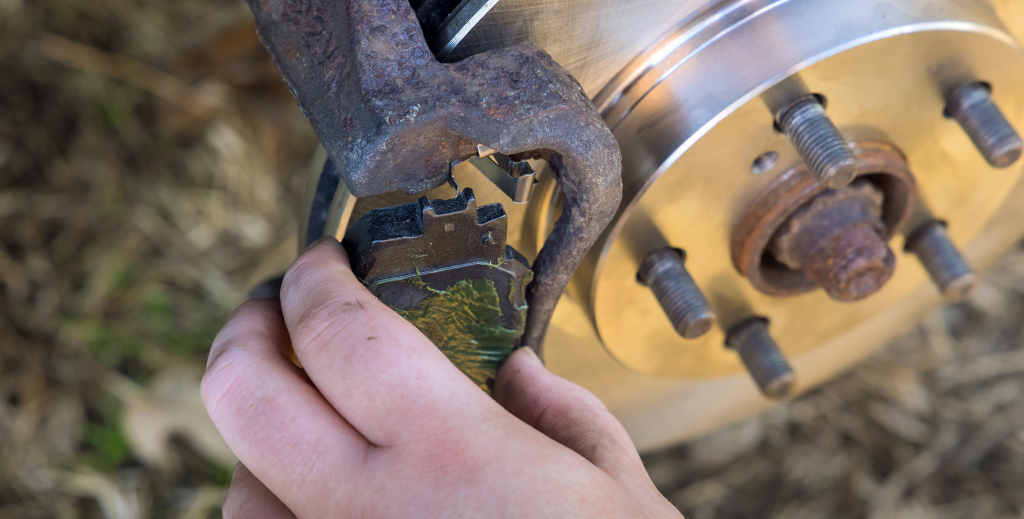
If you drive a car or truck for a time, your brake pads will eventually need to be checked. The good thing is you do not have to guess if they are okay or not. You can do a simple check at home to get an idea of what shape your brake pads are in before you take your vehicle to an auto repair shop.
At Scotty’s Automotive we like it when people come in knowing what is going on with their vehicle. It saves you time. Helps you plan ahead. The system helps you avoid brake system problems which lead to increased repair costs for basic maintenance tasks. The following guide explains how you can inspect your brake pads from your home driveway or parking area.
Why Checking Your Brake Pads Before Scheduling Makes Sense?
Your brake pads wear down slowly. Most people remain unaware of their brake system condition until they hear sounds from their brakes or experience reduced braking performance. The brake pad inspection allows you to decide the right time your vehicle requires maintenance. You can schedule your service appointment for the future if your pads remain in good condition. If they are worn out, you can take your vehicle in sooner. Avoid damaging your rotors.
It also helps you describe what is going on with your vehicle when you call the shop. Telling us “I hear a squealing noise when I brake lightly and my pad looks thin on the front” gives us a better idea of what is going on than “my brakes feel weird.”
A Quick Reminder About Safety First
Before we get into the steps your safety is the important thing.
- Park on a surface
- Set the parking brake
- Put your vehicle in Park or in gear if you have a manual
- Let your brakes cool down if you have been driving
- Never put your fingers near a moving wheel or brake parts
- If you need to lift your vehicle use the jack points and jack stands
Signs You Can Notice Without Tools
You can start by listening for squealing noises. Most brake pads include a tab that produces a high-pitched sound to indicate when the pad has reached its maximum usage limit. You should inspect your brake pads if you can hear this sound throughout the day.
- Grinding is different. When you hear grinding sounds during braking, it indicates that your brake pads have reached their end of life, which causes metal brake components to contact each other.
- You should observe the brake pedal sensation because it provides information about your vehicle’s condition. The brake pedal will feel soft and require multiple pumps to achieve vehicle stopping power which indicates a potential problem.
- If your vehicle pulls to one side when you brake you might have a problem with your brake pads or your brake caliper.
How To Check Your Brake Pads Through The Wheel
You can often see your brake pad by looking through your wheel spokes.
- Turn your steering wheel all the way to one side to get a view
- Look for the smooth metal disc behind your wheel. This is your brake rotor.
- The brake caliper sits over the rotor like a clamp and your brake pads sit inside the caliper.
- You are looking for the part of the pad that rubs against the rotor. If it looks very thin, it is time to take your vehicle in for service.
How To Check Your Brake Pads With The Wheel Off
If you’re comfortable lifting your vehicle and removing the wheel, you can get a better look at your brake pads.
- Locate the caliper. Look at both the outer and inner pads.
- If the inner pad is much thinner than the pad it can be a sign of a problem with your caliper.
- Look for cracks or damage to the pad.
- Also check the rotor for grooves or damage.
What If You Have Drum Brakes In The Rear
Some vehicles have drum brakes in the back of disc brakes.
- You cannot easily check the brake shoes without removing the drum.
- You can still listen for noises. Feel for problems when you brake.
- If you are not sure what kind of brakes you have we can help you figure it out when you take your vehicle in for service.
Mistakes People Make When Checking Their Brake Pads
We like it when people take the time to check their brake pads- but there are a few common mistakes to watch out for.
- Do not just listen for noises to decide if your brake pads are okay. Some pads squeal early while others stay quiet until they are worn out.
- Check all of your wheels not one. Brake wear can be different from one wheel, to another.
- Make sure you are looking at the part of the pad. The metal backing plate is not the part that rubs against the rotor.
When It Is Time To Stop Checking And Start Scheduling?
If you hear grinding, feel a vibration, or notice that your brake pads are very thin, it is time to take your vehicle in for service.
- If your brake warning light is on do not ignore it.
- Even if your brake pads are still good- you might want to take your vehicle in for service if you have a trip coming up or if you drive in heavy traffic.
What We Check At The Shop
When you take your vehicle to [company name] we check the braking system to make sure we find any problems.
- We check the thickness of your brake pads
- We check the condition of your rotors
- We check the brake fluid and hoses
- We make sure everything is working properly
Closing And Next Step
If you take a minute to check your brake pads before scheduling, you will have a better idea of what is going on with your vehicle.
- If your brake pads are worn out or you hear noises it is time to take your vehicle in for service.
- Call [phone number] today to schedule a brake inspection with us. We will help you get your vehicle to stop safely again.
Share:
- Share on Facebook (Opens in new window) Facebook
- Share on X (Opens in new window) X
- Share on LinkedIn (Opens in new window) LinkedIn
- Share on Pinterest (Opens in new window) Pinterest
- Share on Threads (Opens in new window) Threads
- Share on Nextdoor (Opens in new window) Nextdoor
- Share on Reddit (Opens in new window) Reddit
- Share on Bluesky (Opens in new window) Bluesky
- Share on WhatsApp (Opens in new window) WhatsApp
- Share on Telegram (Opens in new window) Telegram
- Email a link to a friend (Opens in new window) Email