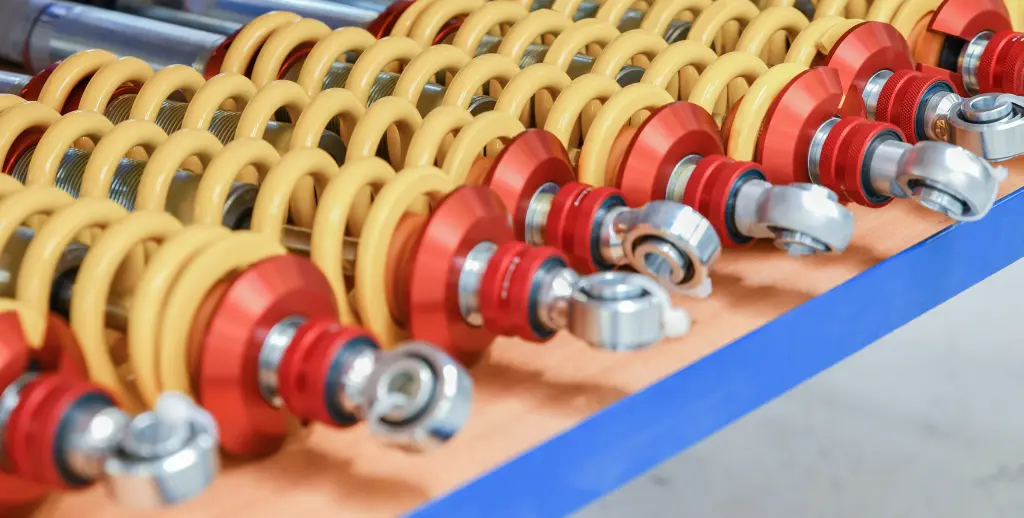
The suspension on your car is critical to your safety when driving. When your suspension components like shocks and struts wear out, you’ll know it, bumpier rides and excessive handling when you brake hard or turn a tight corner. Most drivers confuse these two suspension words, but it is key that you know their different uses when determining the repairs and maintenance options your car needs.
Knowing whether your car uses struts or shocks influences everything from replacement cost to safety performance. Continue reading to gain a better understanding of:
- The fundamentals of your vehicle’s suspension system
- How shocks and struts function differently
- Key warning signs of component failure
- Professional inspection and replacement guidelines
- Why proper suspension maintenance enhances your driving safety
At Scotty’s Automotive, we’ve helped countless drivers navigate these important suspension decisions with expert diagnostics and quality repairs.
Understanding Vehicle Suspension System Basics
Your suspension system on your vehicle is a critical component of your car that attaches it to the ground. It works tirelessly to ensure every ride is smooth and easy to maneuver. This sensitive system of components makes an unsmooth ride smooth and maintains the car stable.
The Three Main Parts of a Suspension System
The suspension system has three main parts that work together perfectly:
- Springs – These support your vehicle’s weight and soak up the initial impact from uneven roads.
- Shock absorbers – These manage the movement of the springs and stop excessive bouncing.
- Struts – These combine shock absorption with structural support in one unit.
How the Suspension System Works with Your Tires
These are synchronized to act in concert with your car wheels in maintaining them in intimate contact with the ground at all times. When you go over a bump or pothole, the springs bend, take in the shock, and the shock absorbers or struts dissipate the resulting motion. The synchronized motion maintains your wheels on the road, and you can give yourself the traction that you need to accelerate smoothly, brake smoothly, and corner smoothly.
Without such a system, your car would run around in an unpredictable manner, and traveling would be uncomfortable and hazardous.
What Are Shocks?
Shocks, or shock absorbers, are hydraulic devices that dampen the spring of your car and cushion the car against violent bobbing. These cylindrical units are composed of pistons and fluid that work together as a unit to absorb the bumps produced when your car goes over bumps, potholes, or uneven road surfaces.
Where Are Shocks?
You typically find shocks mounted at the rear wheels of most cars, but you also have some cars that mount them at all four corners.
How Do Shocks Work?
When driving, shocks work by transforming the kinetic energy of spring motion into heat energy through hydraulic fluid displacement. When your car strikes a bump, springs extend and compress, but the shocks control this movement by:
Controlling the compression and extension rate of springs
Preventing unwanted body movement of the vehicle
Providing tire contact with the road surface
Levelling your vehicle’s ride height
This procedure greatly enhances ride quality by providing your passengers with a smoother, better-controlled ride even on dirt roads.
What Are Struts
Struts are a more complicated component of the suspension in your car. They serve two primary purposes: they’re a shock absorber and a spring that supports the weight of the vehicle. Although single-function shock absorbers simply dampen motion, struts both dampen motion and act as a spring in the same unit, thereby offering an all-encompassing solution for the suspension.
Where Are Struts Located?
You will most often locate struts on your vehicle’s front tires. They serve a critical role in the entire suspension system by offering structure and support. This is different from shock absorbers, which control movement but do not weigh anything.
How Do Struts Work?
Strut design incorporates a coil spring that suspends the weight of the vehicle and an internal shock absorber that regulates swaying and bouncing. Struts are capable of:
Carrying the weight of the vehicle per corner
Regulating the movement of the spring and dampening
Maintaining the wheels in alignment and keeping the steering geometry intact
Offering mounting space for other suspension components to attach
Knowing the Difference Between Struts and Shocks in Car Repair is essential here: you just can’t swap a strut out with a shock absorber. The structural function a strut serves can’t be substituted by plain old shocks, because your car’s suspension design and safety depend upon their particular configuration and mounting location.
Key Differences Between Shocks and Struts
The difference between shocks and struts goes further than their basic purpose of keeping the movement of the vehicle under control. While both components maintain control of bounce and improve ride quality, they perform essentially different roles within your vehicle’s suspension system.
Structural vs. Non-Structural Components
Struts serve as integral structural elements of your suspension system, directly affecting:
- Steering geometry and wheel alignment
- Vehicle height and stance
- Load-bearing capacity of the suspension
Shocks, on the other hand, function purely as dampening devices without any structural responsibilities. They focus exclusively on controlling spring oscillation and reducing bounce.
Exclusive Installation Pattern
Your vehicle uses either shocks or struts at each wheel position – never both simultaneously. This exclusive arrangement stems from fundamental design differences:
- Front wheels: Typically equipped with struts in most modern vehicles
- Rear wheels: Often use traditional shocks, though some vehicles have struts all around
You cannot substitute one for the other due to their different mounting systems, structural requirements, and integration with other suspension components. The specific configuration depends entirely on your vehicle’s make, model, and suspension design.
Signs of Worn or Failing Shocks and Struts
Recognizing the signs of worn shocks and struts can save you from costly repairs and dangerous driving situations. Your vehicle will communicate suspension problems through several noticeable symptoms that shouldn’t be ignored.
Physical symptoms you’ll experience:
- Excessive bouncing after hitting bumps or potholes
- The vehicle continues to rock after coming to a stop
- Nose-diving when braking hard
- Body roll during turns feels more pronounced
- Rough, uncomfortable ride quality
Tire wear patterns reveal specific issues:
- Front tire wear typically indicates strut problems
- Rear tire wear often points to shock absorber failure
- Cupping or scalloping patterns on tire treads
- Uneven wear across the tire surface
Handling and control problems include:
- Poor steering response during emergency maneuvers
- Vehicle feels unstable at highway speeds
- Difficulty maintaining control on rough roads
- Swaying or floating sensation while driving
These signs directly affect your safety by diminishing your vehicle control. Struts and shocks failing leave your tires without maintained contact with the road surface and create slippery situations during sudden stops and evasive actions.
When to Check and Replace Shocks and Struts
Shock and strut inspection schedules follow a regime that keeps you ahead of trouble. Have your suspension parts get their initial complete inspection at 80,000 miles. Then have them inspected every 20,000 miles to keep an eye on them and how they are working.
Your driving habits can accelerate wear patterns and necessitate more frequent inspection:
Heavy city driving with frequent stops and starts
Highway driving on a regular basis with high-speed operation
Off-road excursions or traveling over roadwork
Harsh weather conditions, such as severe winters or extreme heat
Replacement is in order when inspection demonstrates serious wear or damage. Don’t wait, as it avoids a sequence of costly repairs later on your vehicle. Worn strut components add additional stress on your tires, creating uneven and premature tread patterns of wear. Your steering system is also strained when struts begin to fail, leading to wheel alignment problems and expensive repairs.
Knowing the Difference Between Shocks and Struts in Auto Repair puts you on your toes so you can make intelligent timing decisions when the time comes to replace them. Because struts serve structural as well as damping purposes, a failure will impact more than one car system simultaneously, so early replacement is even more beneficial to your safety and your pocket.
Vehicle Safety Benefits from Healthy Suspension
Suspension and safety go hand in hand to get you and your passengers where you’re going safely. Well-maintained shocks and struts are your vehicle’s best defense against unseen road hazards.
When your suspension parts are in good shape, they give you:
Enhanced steering responsiveness while skid lane testing or panic stopping
Enhanced tire-road contact to enhance traction and braking ability
Enhanced stability of your vehicle while cornering, climbing a hill, or cruising on irregular roads
Less body roll stabilizes your vehicle during cornering
Your shock absorber directly influences your capacity to steer your vehicle in situations where only reactions of a split second will suffice. In avoiding road garbage while driving, descending slowly on a rainy or snowy day, or coasting around work zones, quality shocks and struts enable your car to react predictably and solidly to what you do. It is more critical during inclement weather when there is slippery or poor visibility.
Professional Suspension Services at Scotty’s Automotive
When your vehicle needs expert suspension care, we at Scotty’s Automotive are here to help. As your trusted auto repair shop in Sussex County, we offer a wide range of suspension services to meet your needs.
Comprehensive Suspension Services
Our suspension services include:
- Detailed inspections of your suspension system
- Complete replacement of shocks and struts
- Accommodating all makes and models with precision
Expert Diagnosis with Advanced Equipment
While do-it-yourself bounce tests can provide a general sense of suspension issues, our technicians employ sophisticated diagnostic tools to identify particular issues. This enables us to detect possible issues before they become expensive repairs.
What Sets Our Services Apart
Our ASE-certified technicians bring years of concentrated training to each suspension diagnosis. The following sets our auto repair services apart:
Comprehensive examinations of the entire suspension system using professional-grade equipment
Expert replacement of high-quality shocks and struts designed for your vehicle’s specs
Careful alignments to ensure the best performance after replacement
Detailed explanations of discoveries and recommended repairs
If you’re feeling bumpy rides, poor performance, or uneven tire wear, our technicians give you precise diagnoses that go far beyond what you can see or test yourself at home.
Understanding the difference between struts and shocks in auto repairs enables you to make good choices about your vehicle’s upkeep. Bouncing excessively, riding badly, or approaching the 80,000-mile inspection mark are signals not to let things go.
Your safety is up to a functioning suspension system. When you do locate local auto repair shops to repair or replace suspension, be sure to select experienced mechanics who understand the important distinctions among these parts and can give appropriate diagnostics.
Ready to make sure your car’s suspension is running at top-notch? Call us at Scotty’s Automotive at (845) 720-3584 to get your inspection on the books. Our ASE-licensed mechanics have quality repairs to meet your car’s individualized specifications, getting you safely on the road every time.
Share:
- Share on Facebook (Opens in new window) Facebook
- Share on X (Opens in new window) X
- Share on LinkedIn (Opens in new window) LinkedIn
- Share on Pinterest (Opens in new window) Pinterest
- Share on Threads (Opens in new window) Threads
- Share on Nextdoor (Opens in new window) Nextdoor
- Share on Reddit (Opens in new window) Reddit
- Share on Bluesky (Opens in new window) Bluesky
- Share on WhatsApp (Opens in new window) WhatsApp
- Share on Telegram (Opens in new window) Telegram
- Email a link to a friend (Opens in new window) Email