
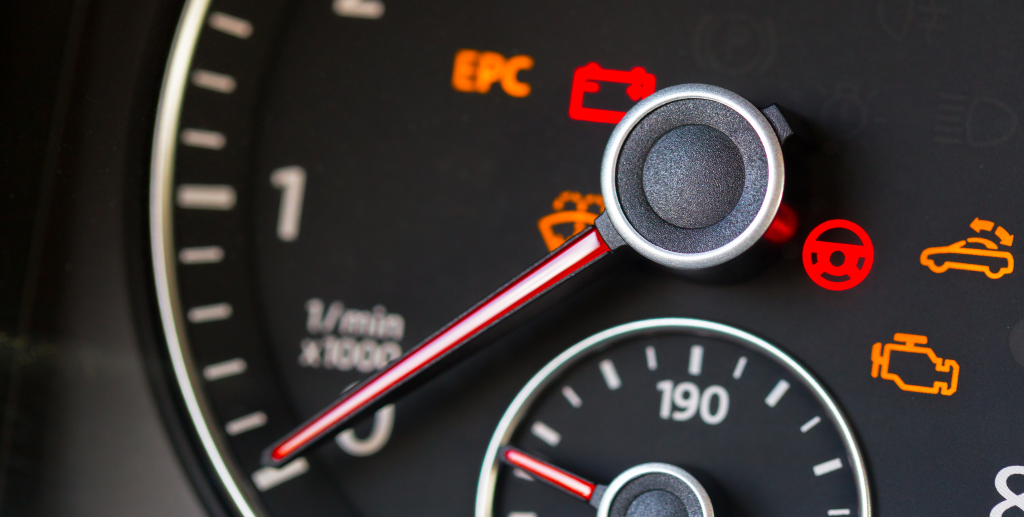
Have you ever turned on your car only to find yourself faced with a newly added yellow or red signal light on your car’s dashboard? Welcome to the club! Millions of other drivers like you are asking questions about their mysterious check engine light.
The check engine light does not give you all the necessary details in most cases, but it is frequently used to draw a driver’s attention to the particular problem with his/her car.
Every week, here at Scotty’s Automotive, we consult numerous drivers who ask us about the mystery of their check engine lights: What does it look like? What caused it to turn on? Is it okay to drive now?
We will try to clarify this issue for you.
What The Check Engine Light Really Looks Like
For the majority of cars and trucks out there, the check engine light takes on one of two forms:
Icon of an engine (often drawn as an outline of a vintage engine block).
Letters “CHECK ENGINE” or “SERVICE ENGINE SOON.”
Most often, the color of the indicator is amber/yellow/orange, but sometimes it could be redder. Upon turning the ignition switch to the ON position (before starting), the light should briefly appear and go out – that is how the self-test works. However, it matters more what happens after the engine starts.
Solid Vs. Flashing: The Most Important Difference
A check engine light can behave in different ways, and the behavior is a big clue about urgency.
Solid Check Engine Light
A solid check engine light usually means the computer detected a problem that needs attention, but it’s not always an immediate emergency. Many drivers first notice it when they’re driving normally, and everything seems fine.
In real life, a solid light can be caused by something as simple as a loose gas cap or as involved as a sensor, ignition, fuel, or emissions-related issue.
Flashing Check Engine Light
A flashing check engine light is the one you should take seriously right away. In many vehicles, a blinking light means that your engine is misfiring and may damage your catalytic converter and other elements of your engine.
If your check engine light is blinking, try to slow down, avoid sudden accelerations, and get a diagnosis done.
Common Reasons Your Check Engine Light Turns On
The check engine light is tied to your vehicle’s onboard diagnostics system. That system monitors a wide range of engine and emissions components, so the causes can vary a lot. Here are a few common ones we see:
- A loose or failing gas cap
- Faulty oxygen sensor or other emissions sensor
- Misfires caused by spark plugs or ignition coils
- Vacuum leaks
- Catalytic converter efficiency issues
- Mass airflow sensor problems
As stated above, it does not really matter what kind of problem is causing the check engine light to stay on. Only diagnostic testing of the vehicle will give a specific answer. It is done via scanning of diagnostic trouble codes.
Is It Safe To Drive With The Check Engine Light On?
Well, it differs from one case to another. There are two options in this regard:
In case the indicator is still, and there are no signs of trouble in the car, you can manage to drive some miles without risking anything, but postponing the diagnostic process will only raise the final cost of repair.
If the indicator is blinking and there are any problems with the operation of the engine (shaking, power loss, overheating, bad smells, noise from the engine), it would be best for you to stop immediately because otherwise, you risk causing engine failure.
Quick Things You Can Check Yourself First
Before assuming the worst, there are a couple of simple checks that are worth doing:
First, check your gas cap. Make sure it’s tightened until it clicks. A loose cap can trigger a check engine light because it affects the fuel vapor system. After tightening it, it may take a few drive cycles for the light to turn off, even if that was the only issue.
Next, pay attention to how the vehicle is running. If you feel rough idle, hesitation, or a noticeable drop in fuel economy, that’s useful information to share with our team when you call.
Why A Diagnostic Scan Matters
A scan tool reads the trouble codes stored in your vehicle’s computer. Those codes point us toward the system involved, and then we confirm the true cause through testing. That’s the difference between replacing parts based on guesses and fixing the problem correctly.
We also like to look at the “freeze frame” data when available, which shows what the engine was doing at the moment the light was triggered. That can be especially helpful for problems that come and go.
Let’s Get That Light Checked The Right Way
A check engine light can be a small warning or an early sign of a bigger issue, and the only way to know is to have it diagnosed properly. If your check engine light is on, flashing, or you’re just not sure what you’re seeing on the dash, call Scotty’s Automotive at (845) 720-3584 today and let’s get you a clear answer and a plan to fix it.
Share:
- Share on Facebook (Opens in new window) Facebook
- Share on X (Opens in new window) X
- Share on LinkedIn (Opens in new window) LinkedIn
- Share on Pinterest (Opens in new window) Pinterest
- Share on Threads (Opens in new window) Threads
- Share on Nextdoor (Opens in new window) Nextdoor
- Share on Reddit (Opens in new window) Reddit
- Share on Bluesky (Opens in new window) Bluesky
- Share on WhatsApp (Opens in new window) WhatsApp
- Share on Telegram (Opens in new window) Telegram
- Email a link to a friend (Opens in new window) Email