
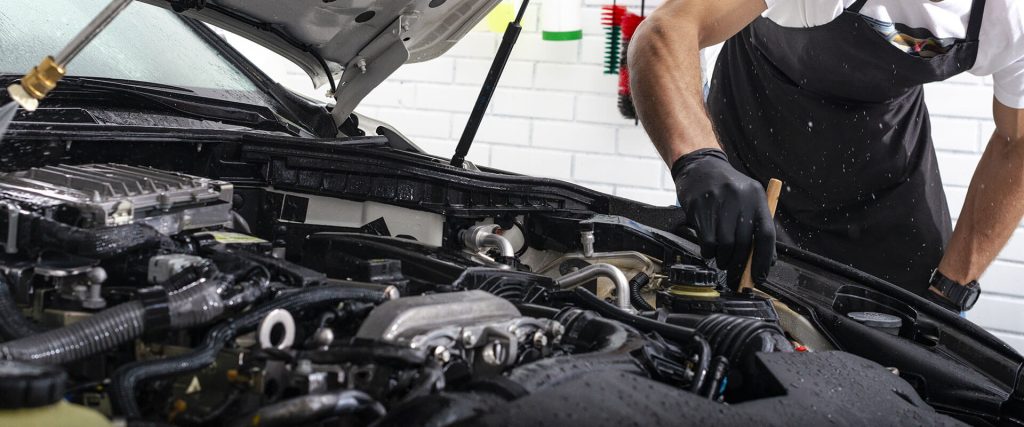
Here at Scotty’s Automotive Services, we think maintenance should be approached more simply. That being said, an engine coolant flush is not too complicated, but is a process that refreshes the fluid to help maintain the most optimal engine temperature while preventing corrosion and heater functionality. Whether you find auto repair daunting or not, maintaining your vehicle’s engine coolant system is essential for your car’s longevity, so check out our pro services and see just how simple it is to help your car run right for longer!
What Does a Car’s Engine Coolant Does
People believe that engine coolant exists to prevent overheating of the engine. Your car’s engine coolant does more than that! Coolant serves multiple functions, including preventing corrosion and protecting the cooling system parts. It serves as a protective shield for metal components that exist in your car’s radiator, water pump, heater, hoses, and engine. The engine coolant system will lose its effectiveness over time because its additives will naturally deplete. This coolant can get acidic, dirty, or thick. That is when you start to have problems with your car’s engine coolant.
When your car’s engine coolant gets old, we see a lot of issues, such as:
- Corrosion inside the car’s engine that creates rust and debris
- Clogged passages in the radiator or heater that reduce flow
- The water pump is wearing out because of the fluid
- Hoses that get soft, swell, or crack quickly
- Hot spots because of air pockets or poor circulation
That is why a car’s engine coolant flush is like taking medicine. You are not just fixing a temperature problem. You are protecting your car’s cooling system from damage that can add up over time.
Engine Coolant Drain And Fill VS Engine Coolant Flush
A drain and fill does just what it sounds like. You drain the car’s engine coolant from the radiator and refill it with the car’s engine coolant. While this is better than doing nothing, it does not remove all the car’s engine coolant and dirt from the car’s engine and hoses!
A car’s engine coolant flush is more of a cleaning. You remove as much of the old fluid and dirt as possible before adding new car engine coolant. This might involve draining the system, running the car’s engine with water to circulate, and bleeding the air from the system.
If your car’s engine coolant is dirty or rusty, you probably need a flush. If your car’s engine coolant looks clean and you are keeping up with maintenance, a drain and fill might be enough. We help our customers decide what to do based on the condition of their car’s cooling system and the manufacturer’s recommendations.
Signs You Need a Car’s Engine Coolant Flush
Some cars make it obvious when they need a car’s engine coolant flush. Others do not. Here are some common signs:
- The car’s engine coolant is not the correct color. A car’s engine coolant is usually bright and clear. A car’s engine coolant can be brown, cloudy, or have debris in it.
- A heater that is not as warm as it used to be because restricted flow often affects the heater first.
- Temperature fluctuations, especially when the car is idling or after driving uphill.
- If you have had work done on your car’s cooling system, it is especially important to bleed the air from the system.
If your car’s engine coolant level keeps going down, that is a problem. A car’s engine coolant should not just disappear. In that case, we need to diagnose the leak and fix it before we do a flush.
What You Need for a Car’s Engine Coolant Flush
A coolant flush is not hard to do if you have the equipment. It is easy to do wrong if you rush it or skip steps. Whether you are doing it yourself or just want to know what we do here, this is what you need to know.
You need the type of car engine coolant for your car. This is not something you can guess. Using the car’s engine coolant can cause problems like gelling, seal damage, or reduced corrosion protection. You also need to mix it with the amount of water. Many cars need a 50/50 mix of car engine coolant and distilled water.
You also need a way to dispose of the car’s engine coolant. The engine coolant in used cars is toxic. It has a smell that can attract animals. You should always take it to an approved disposal location.
Then there is the part that many people forget: removing air from the system after refilling!
Why Air Pockets Are A Big Deal
Air pockets can create spots, reduce heater performance, and cause overheating even when the car’s engine coolant level looks fine. Some car engines are especially sensitive to trapped air because of their design.
That is why bleeding the car’s cooling system is not optional. It is a part of doing the job.
The No-Spill Funnel Trick
One tool that can make a difference is a no-spill engine coolant funnel kit. It is not fancy. It solves two problems.
First, it reduces spills. Car’s engine coolant is slippery and toxic, and spills can happen when you are trying to refill the system.
Second, it helps remove air from the system while keeping the fill point topped up. These kits use adapters to seal the radiator or fill neck. The funnel sits higher than the system, so air can escape.
This tool makes the refill process more predictable. You can watch for bubbles, keep the car’s engine coolant level, and avoid problems like overheating.
What a Car’s Engine Coolant Flush Looks Like
Every car is a little different, but the basics are the same.
We start by making sure the car’s engine is cool, then we inspect the system for leaks, hose condition, and signs of contamination. Suppose we find evidence of oil in the car’s engine coolant or the car’s engine coolant in the oil. We diagnose the problem.
If the system looks good, we drain the car’s engine coolant, capture it safely, and flush the system based on what the car needs. After flushing, we refill with the car’s engine coolant and mixture, then bleed the air. We also check the thermostat, cooling fan, and operating temperature.
Finally, we recheck the car’s engine coolant level after the car’s engine has reached operating temperature and cooled down.
Common Cars Engine Coolant Flush Mistakes
A lot of the car’s cooling system problems we fix started with intentions and a rushed finish. The common mistakes we see are using the car’s engine coolant, mixing incompatible car engine coolants, topping off with tap water, and failing to bleed the air fully.
Another big mistake is reusing a radiator cap. The cap is a pressure control device, and pressure raises the boiling point of the car’s engine coolant. A tired cap can contribute to boil-over symptoms.
One more thing: ignore the reservoir and overflow hose. This small circuit is part of the system’s ability to recover the car’s engine coolant as it heats and cools.
How Often Should You Flush Your Car’s Engine Coolant?
The optimal solution requires drivers to adhere to their vehicle’s prescribed maintenance schedule while using the appropriate engine coolant specified by their vehicle’s manufacturer. The cooling system of a vehicle experiences higher demands when the vehicle operates under conditions of towing, idling, extreme heat, or stop-and-go traffic.
Some coolants can last years under normal conditions, but they are not meant to last forever. People should have their systems tested because they need to understand the contents and service history of their system.
Here at Scotty’s Automotive, we can check the car’s engine coolant condition, verify freeze protection, and look for signs of contamination. That way, you are not flushing early. You are also not waiting until corrosion and buildup start costing you money.
Keeping Your Car’s Engine Cool Starts With One Decision
A car’s engine coolant flush is one of those services that seems minor until you compare it to the cost of overheating, damage, water pump failure, or a clogged radiator. The vehicle requires this maintenance task to maintain proper engine temperature throughout the year while also protecting its parts from rust and preventing unexpected mechanical failures.
If you would like us to inspect your car’s cooling system or schedule a car engine coolant flush, call (845) 720-3584 today and book with us at Scotty’s Automotive. We will make sure you have the car’s engine coolant and that the system is properly bled, and your car leaves ready for the road!
Share:
- Share on Facebook (Opens in new window) Facebook
- Share on X (Opens in new window) X
- Share on LinkedIn (Opens in new window) LinkedIn
- Share on Pinterest (Opens in new window) Pinterest
- Share on Threads (Opens in new window) Threads
- Share on Nextdoor (Opens in new window) Nextdoor
- Share on Reddit (Opens in new window) Reddit
- Share on Bluesky (Opens in new window) Bluesky
- Share on WhatsApp (Opens in new window) WhatsApp
- Share on Telegram (Opens in new window) Telegram
- Email a link to a friend (Opens in new window) Email