
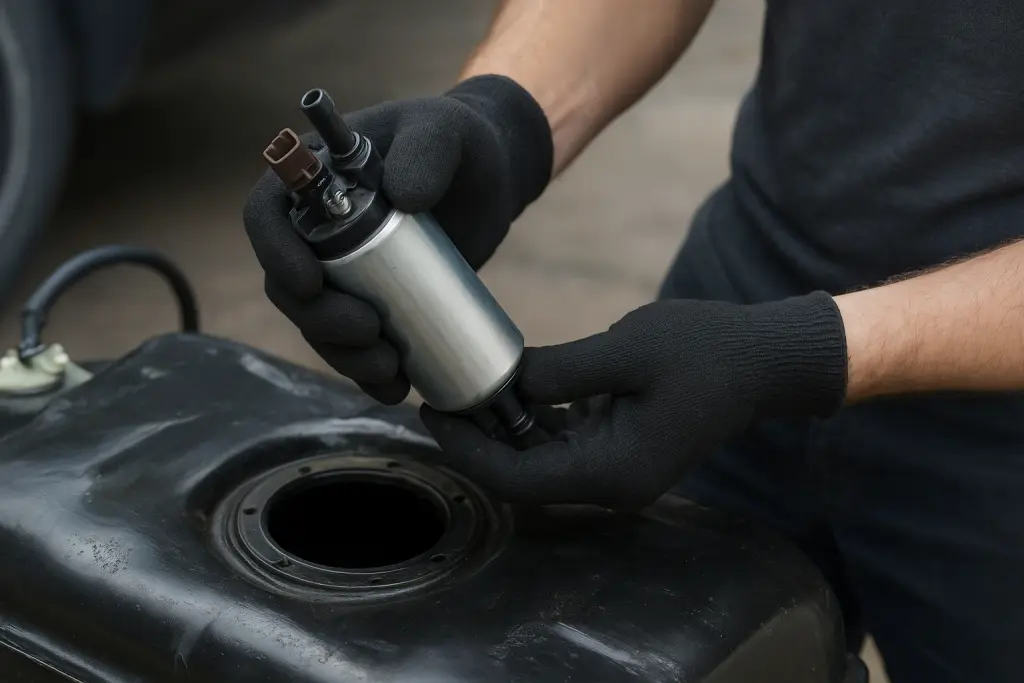
Your car’s fuel pump is a critical part of its fuel system that is responsible for moving gasoline from the tank to the engine. When this critical part starts to fail, you may experience a number of performance issues that will leave you stranded or cost you an arm and a leg to fix.
The question of whether or not you should replace your car’s fuel pump becomes more relevant as your car gets older and racks up miles. Knowing the warning signs of failure will allow you to avoid costly breakdowns and keep your car running reliably.
At Scotty’s Automotive, our ASE-certified mechanics have years of experience in diagnosing and repairing fuel pump faults. We’ve witnessed, firsthand, how a malfunctioning fuel pump will lead to fuel leaks and drastically impact your vehicle’s performance. Our trained technicians employ efficient diagnostic techniques to identify fuel pump malfunctions quickly and offer reliable replacement services.
This guide will assist you in recognizing the undeniable symptoms of fuel pump failure before they become full-blown problems. You’ll discover what to watch out for, when to summon the experts, and how our experienced mechanics can replace a new, operational fuel pump with caution and attention. By identifying these symptoms early on, you’ll keep your vehicle operating smoothly and safely.
Learning About the Fuel Pump and How It Functions
Your fuel pump is part of the fuel delivery system of your vehicle that operates around the clock, pumping gasoline from the gas tank into your engine. This important piece of machinery operates under pressure, forcing fuel through fuel lines and filters to provide your engine with the precise quantity of gasoline it requires in order to produce maximum performance.
The fuel pump works in harmony with several interconnected parts:
- Fuel tank – stores gasoline and contains the pump assembly
- Fuel lines – carry pressurized fuel throughout the system
- Fuel filter – removes impurities before fuel reaches the engine
- Fuel injectors – deliver precise amounts of fuel into combustion chambers
When your fuel pump begins to degrade, the whole system is impacted. A malfunctioning pump will not produce the proper pressure, and the result is inconsistent fuel delivery to your engine. The failure of the fuel pump system creates a ripple effect – your engine will misfire, lose power, or even stall. The malfunction of the pump compels your engine to work harder, considerably reducing fuel efficiency and even leading to expensive damage that must be addressed immediately through auto repair centers.
Causes and Symptoms of Fuel Pump Failure
Your fuel pump is always subjected to rust and dirt in fuel system parts, and contamination is thus one of the primary causes pumps fail. Poisonous materials like corrosion particles, sediment, and debris in your fuel tank build up over time and in the process create a conducive environment that accelerates the wearing down and damaging of primary fuel system parts.
Their buildup leads to what mechanics call a rotted fuel pump outright. Dirt particles moving through your fuel system are like sandpaper on the pump’s inner mechanisms. Rust is unavoidable when metal components are exposed to oxygen and moisture in the fuel, which mix to create corrosive chemicals that destroy the pump housing and inner mechanisms. This process of degradation can totally negate the structural integrity of your pump, for instance, in situations where pumps become so faulty as to cause fuel leakage.
Symptoms of Fuel Pump Failure You Should Watch For
Recognizing the warning signs early can save you from expensive roadside emergencies. Your vehicle will usually show several clear symptoms of fuel pump failure:
Decreased fuel efficiency – You’ll notice your gas tank emptying faster than usual, as a failing pump struggles to maintain proper fuel pressure
Unusual sounds from the fuel tank area – Listen for whining, buzzing, or grinding noises, especially when starting your car
Engine performance issues – Your engine may sputter, hesitate during acceleration, or stall unexpectedly
Difficulty starting – The engine cranks longer than normal or fails to start altogether
Power loss during driving – Your car may lose power while climbing hills or during highway acceleration
These symptoms signal your fuel pump is no longer able to consistently deliver fuel to your engine. Whenever you notice any combination of these signs, your pump is probably having trouble withstanding internal impairment due to contamination buildup, and professional diagnosis or even replacement may be necessary.
Diagnosing Fuel Pump Problems and The Replacement Process
When you take your car to skilled mechanics such as Scotty’s Automotive, they have a step-by-step system to verify if your fuel pump must be replaced. The diagnostic process starts with plugging in specialized diagnostic tools into your vehicle’s computer system to download error codes and scan fuel pressure readings.
Main Diagnostic Steps:
Fuel pressure check – Mechanics hook up a fuel pressure gauge to check if your pump provides sufficient pressure to the engine
Visual check – Looking for general evidence of corrosion, leaks, or damage in the general fuel tank region
Electrical check – Confirming that the fuel pump is receiving adequate voltage and amperage
Checking fuel quality – Testing fuel samples for contamination that might signal pump degradation
The replacement process involves detailed caution when it comes to safety procedures because you are working with dangerous, flammable material. Your mechanic will drain the fuel tank and remove the battery first to avoid any electrical shock. The fuel tank should be dropped or removed completely for you to be able to reach the pump assembly, which is usually mounted within the tank.
What You Can Expect During Replacement:
- Full removal of the old, rotten-out fuel pump assembly
- Comprehensive cleaning of the fuel tank internal surface to clear out contaminants and dirt
- Installation of a new fuel pump with new seals and gaskets
- Testing of the system to guarantee proper pressure and flow rate
Expert mechanics employ specialized equipment such as fuel line disconnect tools, tank lifting devices, and pressure testing equipment to safely and properly get the job done. The job usually takes a few hours, depending on your vehicle’s configuration and accessibility.
Finding Trusted Mechanics for Fuel Pump Repair & Preventive Maintenance Tips
Selecting the Right Professional for Your Fuel Pump Needs
When your vehicle shows signs of fuel pump failure, choosing a qualified mechanic becomes critical for proper diagnosis and repair. Look for auto repair shops that specialize in fuel system repairs and have experience with your specific vehicle make and model.
Key Qualifications to Consider:
ASE Certification – Certified mechanics demonstrate proven expertise in automotive systems
Customer Reviews – Check online reviews and ask for references from previous fuel system repairs
Specialized Equipment – Ensure the shop has proper diagnostic tools for fuel system testing
Warranty Coverage – Reputable shops stand behind their fuel pump replacement work
At Scotty’s Automotive in Sussex County, NJ, decades of experience from ASE-certified mechanics are applied to fuel pump diagnosis and replacement. We understand that technical competence, trust, and satisfaction with the customer are necessary to find a reputable mechanic for fuel pump replacement.
Preventive Maintenance to Guarantee Fuel System Health
Keeping your fuel pump from premature failure begins with good maintenance habits:
Use Quality Fuel – Use reputable gas stops and not dirty fuel sources
Keep Fuel Tank Clean – Get the fuel system cleaned on a regular basis to clear dirt and rust buildup
Change Fuel Filter – Replace filters per manufacturer’s guidelines
Don’t Run on Empty – Allowing the pump to get low on fuel causes it to overheat and fail prematurely
These basic practices cut the power of dirt, rust, and contamination that lead to fuel pump failure by a great amount.
Choose Scotty’s Automotive Repair
Your car’s performance need not be left to chance when fuel pump problems arise. The symptoms we’ve mentioned – from gas-guzzling to strange noises and engine sputter, must be attended to by a professional right away to avoid expensive repairs and protect you on the road.
Don’t wait until your fuel pump packs up for good. Catching it early saves you a buck and avoids the hassle of being stranded in a non-movable vehicle.
Ready to have your fuel pump diagnosed and repaired by expert technicians? Call Scotty’s Automotive today at (845) 720-3584. Our ASE-certified techs offer the best diagnostics and proven repairs so your car is safe and good as new. With our state-of-the-art fuel system knowledge and dedication to quality work, we’ll have you safely back behind the wheel.
Share:
- Share on Facebook (Opens in new window) Facebook
- Share on X (Opens in new window) X
- Share on LinkedIn (Opens in new window) LinkedIn
- Share on Pinterest (Opens in new window) Pinterest
- Share on Threads (Opens in new window) Threads
- Share on Nextdoor (Opens in new window) Nextdoor
- Share on Reddit (Opens in new window) Reddit
- Share on Bluesky (Opens in new window) Bluesky
- Share on WhatsApp (Opens in new window) WhatsApp
- Share on Telegram (Opens in new window) Telegram
- Email a link to a friend (Opens in new window) Email