
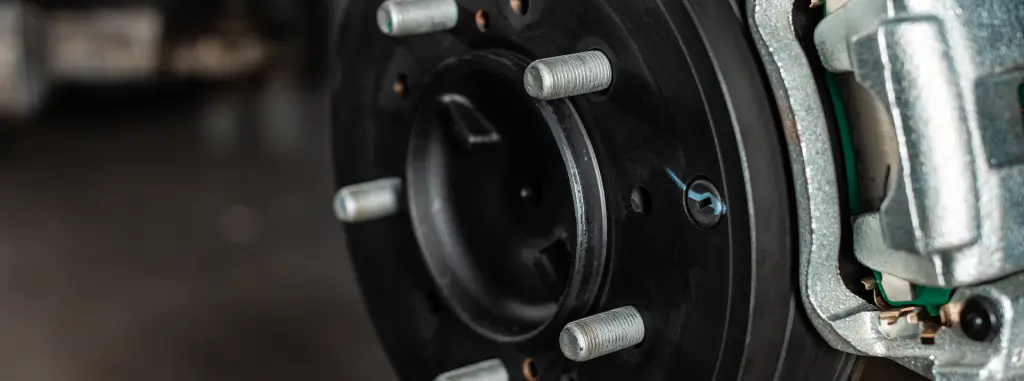
Among the most critical safety features most drivers will ever use is the anti-lock brake system (ABS) of their vehicles. For many, however, this is as far as they go in understanding this feature: simply that it is supposed to help them stop. In fact, ABS could mean the difference between a safe stop and a dangerously skidding vehicle when you need it the most.
Knowledge in this particular aspect should, however, go beyond safety; it should also be important for your confidence behind the wheel. When you know how your braking system works, you’re better equipped to:
- Handle emergency situations
- Maintain your vehicle properly
- Make informed decisions about repairs
- Drive safely in challenging conditions
We have put together this detailed guide to help you become an expert on anti-lock brakes. You will find out how the components of the ABS work, what benefits ABS have in contrast to traditional braking systems, and many different types of ABS technologies. It also discusses proper usage techniques and other vital maintenance tips to ensure that your system performs at optimum conditions.
So, ready to be an ABS expert? Let us enter the world of anti-lock braking systems and take driving safety knowledge to the next level.
Getting to Know Anti-Lock Brakes: Parts and Their Functionality
The purpose of anti-lock brakes (ABS) is to be the safety net of your vehicle on an emergency stop or in a sudden brake application, preventing wheel lock. You can think of ABS as a very good driver who is able to pump the brakes faster than any other human-an astonishing speed of about 15 times per second.
How ABS Works
Hit the brakes hard enough, and the system knows that one of the wheels will stop turning completely – which is what will happen if it skids – and instead releases and reapplies brake pressure in a rapid cadence. This allows tires to maintain their grip on the road surface and still lets you steer.
Key Components of Your ABS System
- Wheel Speed Sensors – These electronic sensors monitor the rotation speed of each wheel, detecting when a wheel is about to lock up
- Electronic Control Unit (ECU) – The system’s brain processes data from the sensors and controls brake pressure
- Hydraulic Unit – Contains valves that regulate brake fluid pressure to each wheel
- Pump – Restores pressure to the braking system during ABS activation
This certainly reduces the chances of losing control of a vehicle, it might not do away with all beneficial measures that need to be practiced.
A pulsing sensation will be felt at the brake pedal when these components work in combination during emergency stops. That vibration is normal – your ABS hard at work keeping you safe and in control of your vehicle.
When you need to stop quickly, the system works automatically so nothing special is required of you, apart from pressing firmly and steadily on the brake pedal. Your ABS takes care of skids and maintains control of steering around other vehicles and any other obstacles.
Advantages of Anti-Lock Brakes Over Conventional Braking Systems:
There is much difference in performance and safety between these types of brake systems when compared to traditional hydraulic brake systems. The traditional systems will create a situation where during an emergency stop there will build a lock-up off the wheels, leading to a loss of control and an increased risk of skidding. ABS, on the other hand, modulates the brake pressure in very rapid succession.
Benefits of ABS:
For extreme braking situations: Since the wheels do not lock up, the vehicle can be steered around obstacles.
Skidding less often: Prevents skidding on surfaces that are slippery such as ice or on a wet road.
Short braking distances: Notably, on mixed or slippery surfaces, the stopping distance is reduced when compared to conventional models.
Greater overall stability of the vehicle: braking traction are applied during braking, thus enabling stability and maintaining control over the vehicle.
But ABS will not negate any of the good habits that should be followed.
Remember, while ABS significantly enhances safety and control, it does not replace the need for cautious driving. Always drive responsibly regardless of your vehicle’s braking system.
Different Types of Anti-Lock Brake Systems Explained
Your vehicle’s ABS configuration plays a crucial role in its performance and safety capabilities. Let’s explore the main types you might encounter:
1. 4-Wheel ABS
All four wheels are monitored and controlled independently by this system. Maximum stability is provided during emergency braking while maintaining steering control on a variety of road surfaces. Almost all modern passenger cars and SUVs come with this configuration as a standard feature.
2. Rear-Wheel Only ABS
The function of rear-wheel only ABS is as stated-it is for only the rear wheels. Mostly found in pick-up trucks and cargo vans, benefits of one type of brake system are that it helps reduce the chances of rear-end sliding during heavy loads, especially when moving loads of shifting, and attaching a trailer. For rear-wheel use only-used ABS is a cost-efficient application designed for certain vehicles that may not need four-wheel monitoring for extra safety without the locked-in complexity or expense of a more complete system.
Make the decision on which of the systems to choose depending on the primary use of the vehicle. Four-wheel ABS was designed for all SUVs and passenger cars because that is how most maneuvers are done through these areas, especially when the roads become tough. It is expected that with that all-objective nature of the brakes, wheel lock-up would not happen among all four corners and maintain directional control while braking .
They are some of the typical conditions where rear-wheel ABS is usually installed, especially for pickup trucks and commercial vans, in the management of weight throughout cargo use. It is designed to prevent the rear end from lighting during sudden stops, which typically happens when the vehicle carries heavy loads in the truck bed or cargo area.
Each ABS type optimizes vehicle performance based on specific driving needs:
- City Driving: 4-wheel ABS excels in stop-and-go traffic
- Highway Travel: Both systems provide stable emergency braking
- Load Carrying: Rear-wheel ABS manages weight shifts effectively
- Off-Road Use: 4-wheel ABS adapts to varying surface conditions
The Evolution and Regulatory Background of Anti-Lock Brake Technology
Anti-lock brake history started in the skies, not on roads. Aircraft manufacturers in the 1920s created the first mechanical ABS systems to avoid wheel lockup during landing. This technology set the stage for automobile applications decades later.
The Development of Electronic ABS
The development of the car ABS also made another leap in 1978 when Mercedes-Benz teamed up with Bosch to introduce the world’s first passenger car electronic anti-lock brake system. The innovative technology was founded on computer-sensored wheel-speed monitoring and modulation of brake pressure, a far cry from the cumbersome mechanical systems employed in the past.
Standardization and Universal Adoption
The 1980s and 1990s witnessed wide usage of ABS in luxury cars, but it was still exorbitantly expensive for mass market vehicles. The scenario took a turn for the better in 2000 when the U.S. National Highway Traffic Safety Administration (NHTSA) made standardized application of ABS mandatory for most vehicle segments.
Evolution of ABS Technology Today
Modern ABS systems now enjoy recent technological development to transform such systems into highly advanced safety networks. Contemporary ABS is normally coupled with electronic stability control, enabling drivers with enhanced handling in emergency maneuvers as well as on icy roads. Modern sensors nowadays offer greater accuracy in wheel speed monitoring, enabling the system to respond more accurately to oncoming skids or lockup.
The processing units of contemporary ABS are also much faster, giving split-second reaction times that add to driver safety. Self-diagnostic features have also been included, which give advance warning of faults and immediate maintenance, so the anti-lock braking system is always in its best state of operation.
Today’s ABS technology costs a fraction of early systems while delivering superior performance. These advances have been incorporated into standard safety equipment for most new cars and, thus, have resulted in millions of drivers across the world being protected.
Identification and Proper Use of a Vehicle’s Anti-Lock Brake System
Learning how to check for and correctly use your ABS system can change your driving safety dramatically. Here’s what you need to know:
Checking for ABS in Your Vehicle
- Look for the ABS indicator light on your dashboard – it typically displays “ABS” in amber color
- Check for wheel speed sensors near each wheel (small wire-connected devices)
- Locate the ABS control module under the hood (a box-shaped component with brake lines)
Using Your Owner’s Manual
Your vehicle’s manual contains vital information about:
- Specific ABS features and capabilities
- System limitations
- Required maintenance schedules
- Troubleshooting guidelines
Proper ABS Usage in Emergency Situations
- Press the brake pedal firmly
- Maintain steady pressure – don’t pump the brakes
- Keep steering as needed – ABS allows directional control
- Expect normal ABS sensations like pedal vibration, pulsing sensation, and mechanical noise
Quick ABS Test
You can safely test your ABS system in an empty parking lot:
- Drive at 20 mph
- Apply firm brake pressure
- Feel for pedal pulsation
- Listen for clicking sounds
These signs indicate your ABS is working correctly. If you notice anything unusual during testing or daily driving, it’s time for a professional inspection. At Scotty’s Automotive, we recommend familiarizing yourself with your ABS system before you need it in an emergency situation.
Maintenance Tips for Keeping Your Anti-Lock Brake System in Optimal Condition
Your ABS needs regular attention to maintain peak performance. Here are key warning signs that signal it’s time for professional ABS maintenance:
- Illuminated ABS Warning Light: A steady light indicates system malfunction requiring immediate inspection
- Grinding or Buzzing Sounds: Unusual noises during braking suggest worn sensors or damaged components
- Hard or Pulsating Brake Pedal: Changes in pedal feel outside normal ABS operation need evaluation
- Increased Stopping Distance: If your vehicle takes longer to stop, schedule an inspection right away
Scheduled maintenance tasks include an annual brake fluid flush so that contaminants are kept at bay. Wheel speed sensors also need debris buildup inspection and test for electrical connections along with system diagnostics. Additionally, the brake pads, rotors, and all other mechanical components must undergo regular checking to ensure the ABS system’s functionality.
Keeping the ABS system well-maintained ultimately assures your safety on the road. With these high-tech equipment and know-how, professional auto repair technicians quickly diagnose and solve possible issues before they become serious problems. The first signs of ABS trouble will call for a thorough inspection with qualified experts in car repair Sussex County, NJ to safeguard your vehicle against possible braking hazards.
Why Choose Scotty’s Automotive for Your Brake Repair Needs?
Your car’s braking system requires expert attention from technicians who comprehend its complexities. We combine decades of shared experience in every brake repair.
We are a family-owned repair shop that really takes care of your automobile as if it were one of ours. Our complete brake diagnostics experts use the latest tools to identify problems within your braking system. We will repair your anti-lock brakes and maintain your entire ABS system so that these brakes are functional in every possible situation.
We offer brake pad and rotor replacement services with 100% genuine and best quality parts to last for quite some time; with every visit, you receive a full brake inspection system to keep you safe in the road-orienting mind marital trust on your vehicle’s functionality.
Communication is clear and transparent; thus, customers know what is taking place with their vehicles always. Our base of quality rationale is to get things done correctly the first time, no shortcuts, and no unnecessary repairs. Build relationships that last through communication and transparency.
Ditch the dealership to get your car fixed! You get your car worked on by smart, talented technicians at Scotty’s, who pride themselves on their work and love doing it right, save, safety for the family on the road, and it is reliable brake service that can be trusted.
Scotty’s Automotive was not an option close to home; it houses an anti-lock brake system that is as vital to any vehicle as safety is on the road. Do not postpone brake repair matters; maintenance and quick action on issues will save repair expenses and unnecessary trips in emergencies of unsafe situations.
Here at Scotty’s Automotive in Sussex County, NJ, we keep your anti-lock brake system in tiptop shape, and our skilled technicians at the shop will ensure that your brakes are functioning properly and that you can drive databased peace of mind.
Interested in making an appointment for brake service? Call (845) 720-3584 for brake service scheduling-we are dedicated to making certain that you and your family enjoy expert brake diagnostics and repairs done right the first time.
Share:
- Share on Facebook (Opens in new window) Facebook
- Share on X (Opens in new window) X
- Share on LinkedIn (Opens in new window) LinkedIn
- Share on Pinterest (Opens in new window) Pinterest
- Share on Threads (Opens in new window) Threads
- Share on Nextdoor (Opens in new window) Nextdoor
- Share on Reddit (Opens in new window) Reddit
- Share on Bluesky (Opens in new window) Bluesky
- Share on WhatsApp (Opens in new window) WhatsApp
- Share on Telegram (Opens in new window) Telegram
- Email a link to a friend (Opens in new window) Email