
Finding a repair shop is easy. Finding one that does not guess with your money is the part that matters.
Most drivers do not start looking for the best car repair shop because they are bored on a Tuesday. Something usually happened. A light came on. The truck started pulling. The car made a noise that sounded expensive, or at least annoying enough to ruin the drive home.
That is when the shop you choose makes a difference.
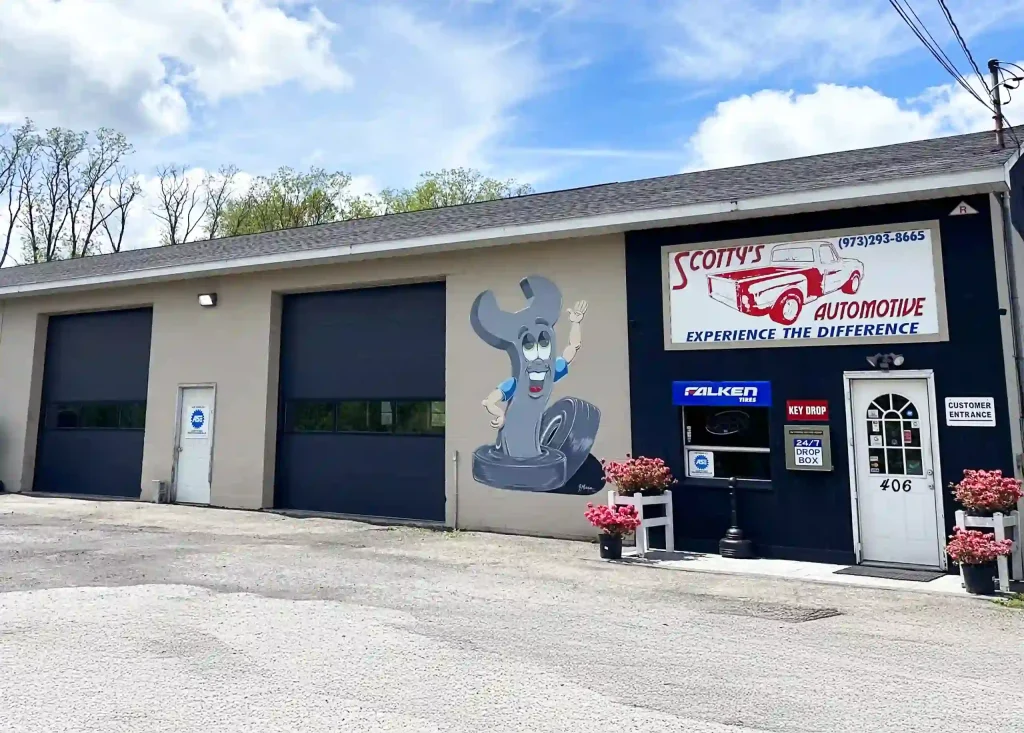
At Scotty’s Automotive Care in Sussex County, NJ, we see plenty of vehicles after someone already tried a repair somewhere else. Sometimes a part was replaced and the problem stayed. Sometimes the problem changed, which is even more frustrating. And sometimes nobody did anything wrong exactly. Modern vehicles can be tricky. Sensors talk to modules, modules talk to other modules, and one bad reading can make three different systems act weird.
Still, a good shop should have a process. Otherwise, you are just paying for guesses with a receipt attached.
Best Car Repair Starts With Diagnosis
The best car repair is not always the fastest answer. It is the right answer.
That sounds obvious, but it is where a lot of repair headaches start. A code reader may show a fault, but that does not always mean the part named in the code is bad. It is a clue. Sometimes a good clue, sometimes a lazy little troublemaker.
A misfire code, for example, could be a spark plug. It could be a coil. It could be an injector, vacuum leak, compression issue, fuel pressure problem, wiring problem, or something else hiding behind the same symptom.
So if a shop plugs in a scanner and immediately says, “Yep, needs this,” with no testing, be careful. Maybe they are right. Maybe. But maybe your wallet is about to become part of the experiment.
A real diagnostic process slows down long enough to confirm what is actually failing.
Good Shops Ask Better Questions
The questions a shop asks can tell you a lot.
When does the problem happen? Cold start or after driving awhile? Highway speed or stop-and-go? Turning left? Braking? Going uphill? Did it start after other work was done? Did the warning light come on before or after the noise?
Those details matter more than people think.
You do not need to speak mechanic. You just need to explain what you noticed. “It only does it after I drive for 20 minutes” is useful. “It happens when I back out of the driveway, but not later” is useful too. Even “my teenager drove it and now it sounds possessed” gives us a place to start. Slightly terrifying, yes. Still useful.
At Scotty’s Automotive Care, those details help us test the right system instead of wandering around the vehicle like we are looking for lost keys.
Codes Are Clues, Not Final Answers
This is where a lot of drivers get burned.
A check engine code can point us in a direction, but the code does not always name the failed part. It may show what the computer noticed, not what caused it.
For example, an oxygen sensor code could be a bad sensor. It could also be an exhaust leak, vacuum leak, fuel mixture problem, wiring issue, or another problem making the sensor report something unusual.
Same with ABS lights, traction control lights, charging system warnings, and transmission codes. The warning light is the vehicle saying, “Hey, something is off.” It is not always handing over a shopping list.
That is why testing matters. Live data, visual checks, voltage tests, pressure tests, smoke tests, road tests, and sometimes a little patience. Not glamorous. Very necessary.
Clear Communication Saves Everybody A Headache
A good repair shop should explain what it found in normal words.
You should know what is confirmed, what still needs testing, and what the repair is supposed to fix. You should also know if there are related issues that may show up later. Nobody likes surprises, especially surprise invoices.
A written estimate helps too. Not just a random total, but a clear explanation of parts, labor, and the reason for the repair. If more work is needed, you should hear about it before the work happens, not after.
At Scotty’s Automotive Care, we try to keep that part simple. Here is what we found. Here is why it matters. Here is what it takes to fix it. Here is what can wait, if anything can wait.
Fancy? No. Useful? Yes.
Cheap Is Not Always Cheaper
Everybody wants a fair price. That makes sense.
But the cheapest repair is not always the least expensive one by the end. If the wrong part gets replaced, you still have the original problem plus a bill. If a cheap part fails early, you are back at the shop. If an installation step gets skipped, the same warning light can come right back and laugh at everybody involved.
Brakes are a good example. Cheap pads may be noisy, dusty, or wear rotors faster. Suspension parts that do not fit or hold up well can bring back clunks and alignment problems. Electrical parts can be even pickier.
Good car repair is not about throwing the most expensive part at everything, either. It is about using parts that make sense for the vehicle and doing the job the right way.

The Boring Details Matter
A lot of good repair work is boring. That is not an insult. Boring is what keeps the car from coming back for the same problem.
Torque specs matter. Cleaning surfaces matters. Road testing matters. Relearn procedures matter. Battery voltage matters when diagnosing electrical issues. So does checking the simple stuff before chasing the weird stuff.
A wheel that is not torqued correctly can cause problems. A dirty sensor surface can bring a light back. A missed fluid leak can make a new part look like it failed. Little things become big things when nobody pays attention.
The best shops care about the boring details because those details are usually where comebacks are born.
Watch For The Guess-First Shop
Some signs are easy to spot.
If every problem gets an instant answer before testing, that is not great. If the explanation keeps changing but the bill keeps growing, it’s also not great. If nobody can explain what the repair is supposed to solve, you have a problem.
You should not have to beg for a clear estimate. You should not feel stupid for asking questions. And you should not be pressured into repairs without understanding what is going on.
A good shop may not always have the answer in five minutes. Honestly, some problems need time. But they should be able to explain the next step and why it makes sense.
What To Ask Before You Approve The Work
You do not need a whole interview. Just ask a couple of plain questions.
What did you test, and what did it show?
What problem is this repair supposed to fix?
Is this safety-related, or can it wait a little?
Will you call me before doing anything extra?
Those questions are not rude. They are reasonable. A shop with a real process should not mind answering them.
The Best Shop Helps You Make A Decision
Car repair can feel stressful because most people are trying to make decisions with incomplete information. That is why communication matters so much.
A good shop will tell you what needs attention now, what is maintenance, what is a safety concern, and what can be planned for later. Not everything is an emergency. Some things are. Knowing the difference helps you spend money where it actually matters.
That is the kind of repair experience drivers want, even if they do not say it that way. They want the car fixed, the truth explained, and no guessing game.
Schedule Car Repair In Sussex County, NJ
If your car or truck has a warning light, a strange noise, a pulling problem, or an issue that keeps coming back, call Scotty’s Automotive Care in Sussex County, NJ at (845) 720-3584.
We will take a look, explain what we find in plain language, and help you get the repair handled without guessing your way through it.