
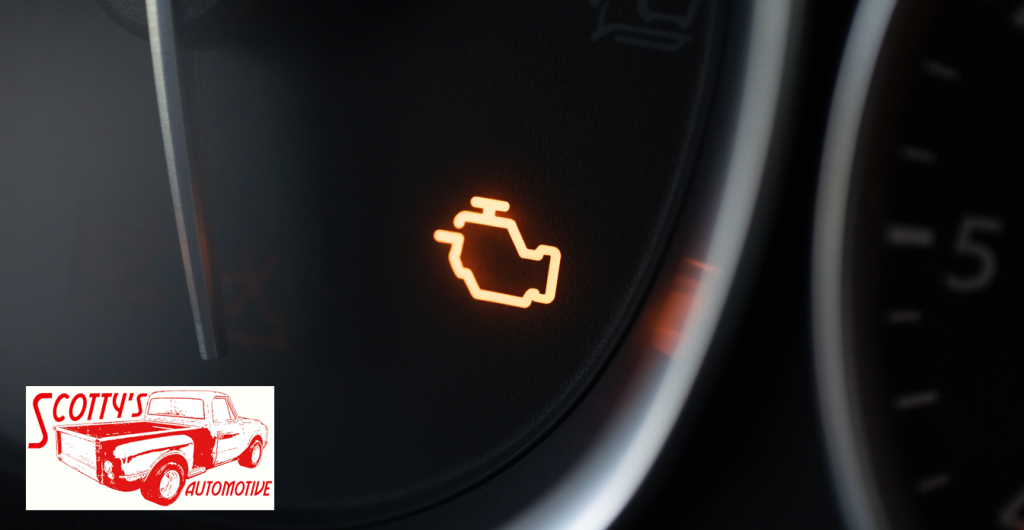
That little check engine light has a way of showing up at the worst time. You might be hoping the check engine light is “just a sensor.” Or, you might be concerned about the poor performance of your vehicle. Either way, speculation will only lead to further problems in the future. We recommend you address your concerns immediately by having your vehicle diagnosed for the check engine light, since the same warning light can indicate numerous causes, ranging from minor to very serious problems with your engine.
Clearing the check engine light alone will not solve the issue, especially when the underlying cause is ignored. Just like ignoring a fire alarm will lead to worsening damage, clearing the warning light will just hide the problem. Not addressing the actual issue that led to the appearance of the check engine light will allow problems to worsen in the future while losing valuable information about the situation.
The Cause of the Check Engine Light
There are numerous sensors and systems within the engine computer of your vehicle. Whenever a system performs outside of an acceptable range, your engine computer stores codes and displays the check engine light.
While the check engine light does not flash in some situations, in others it is flashing. Generally, this indicates the need for maintenance in the near future. The flashing check engine light means that your vehicle has experienced misfire which can harm the catalytic converter, an expensive component of the emission system. In such a case, we recommend reducing your driving and visiting our shop immediately.
Common Symptoms That Go With A Check Engine Light
A check engine light can show up with obvious symptoms or none at all. We see both situations all the time. You might notice reduced fuel economy, rough idle, hesitation, a sulfur smell, or poor acceleration. Or the vehicle might feel completely normal, especially if the issue is small or intermittent.
Here are a few real-world examples of what can trigger the light:
- A loose or failing gas cap that causes an EVAP leak code
- Ignition misfires from worn spark plugs or failing coils
- Vacuum leaks that throw off the air-fuel mixture
- Faulty oxygen sensors or mass airflow sensors
- Catalytic converter efficiency codes
- Thermostat or coolant temperature faults
- Transmission-related faults on some vehicles
The important thing is this: the code is only a starting point. The correct repair comes from testing, not assumptions.
What A Check Engine Light Diagnostic Really Includes
At Scotty’s Automotive, we treat a check engine light issue as a process and not a simple guess.
To start with, we connect a scan tool to your vehicle’s computer to view codes and freeze frame data. This is particularly helpful because, at the moment the computer recorded the trouble, it also recorded numerous values of various sensors and parameters of your car, such as engine load, temperature, fuel trims, and speed. Knowing the exact information about this can help us narrow down the cause significantly.
After verifying the symptoms and performing tests, we confirm our findings. Based on the information provided to us, the testing may include smoke testing to detect an intake/EVAP leak, reading live data from the sensors, inspecting ignition components and their performance, confirming fuel pressure, testing wiring, and connectors. We do not assume anything before we prove otherwise – we will not replace a sensor that displayed a trouble code. Many sensor codes are caused by something else upstream or downstream.
Finally, we explain what we found in plain language and walk you through repair options. Our goal is to help you make a smart decision with clear information, not pressure.
Why “Free Code Reads” And DIY Scanners Can Mislead You
Parts stores and basic code readers can be useful for getting a rough idea of what system is involved, but they’re often misunderstood. The trouble code rarely says “replace this part.” It usually says “the computer saw a condition it didn’t like.”
For example, an oxygen sensor code might be caused by an exhaust leak, a fuel trim issue, an engine misfire, or wiring damage. Replacing the oxygen sensor without testing can waste money and leave the real problem untouched.
DIY tools may lack manufacturer codes and detailed live readings, as well as diagnostic tests necessary to determine the issue and validate the diagnosis.
Is It Safe To Drive With the Check Engine Light On?
That will depend on the cause and highlights the importance of testing to identify the source of the problem.
If the vehicle runs without problems and there is no blinking of the light, you might be able to drive it for some period, but it is better to get the vehicle inspected as soon as possible, since seemingly small problems could develop into serious issues leading to damage to emissions control systems.
If the check engine light flashes or is accompanied by shaking of the vehicle, poor acceleration, or a smell of fuel, then it would be better to stop driving the vehicle to prevent more costly repairs, as continuing to drive with a malfunctioning engine will result in a damaged catalytic converter requiring extensive repair work.
How To Avoid Unnecessary Repairs
The fastest way to waste money is to replace parts based on guesses. The fastest way to fix it correctly is to test the system that triggered the code and confirm the root cause.
At Scotty’s Automotive, we focus on accuracy first. That means:
- Confirming the code and the conditions that set it
- Testing the related components and systems
- Repairing the actual cause, not just the symptom
- Verifying the fix after repairs so the light stays off for the right reason
That approach saves time, prevents repeat visits, and helps your vehicle stay reliable.
Schedule Your Check Engine Light Diagnostic Today
There is no need to wait for your check engine light to make your face car trouble. Allow us to inspect and diagnose the problem in order to find its exact cause. Feel free to call us at (845) 720-3584 to book a check engine light inspection from our pros here at Scotty’s Automotive.
Share:
- Share on Facebook (Opens in new window) Facebook
- Share on X (Opens in new window) X
- Share on LinkedIn (Opens in new window) LinkedIn
- Share on Pinterest (Opens in new window) Pinterest
- Share on Threads (Opens in new window) Threads
- Share on Nextdoor (Opens in new window) Nextdoor
- Share on Reddit (Opens in new window) Reddit
- Share on Bluesky (Opens in new window) Bluesky
- Share on WhatsApp (Opens in new window) WhatsApp
- Share on Telegram (Opens in new window) Telegram
- Email a link to a friend (Opens in new window) Email