
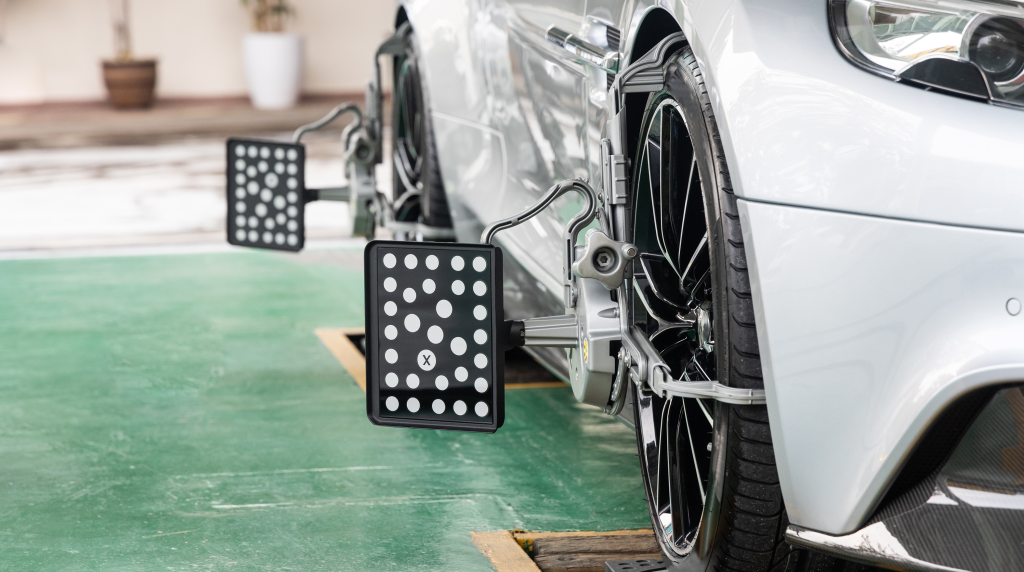
It’s safe to assume that most motorists will ignore wheel alignments until they start experiencing odd steering and find themselves replacing their new set of tires much sooner than they had planned.
However, there are many aspects of driving a motor vehicle that rely on wheel alignment. From handling to tire wear and even stability at high speeds, everything seems to be affected by this important yet overlooked procedure.
Every week at Scotty’s Automotive, our technicians see the same scenario over and over. The client comes in requesting tires, suspension repairs, or a complete steering service when all he or she needs is an alignment. Unfortunately, this condition has gone undiagnosed for weeks or even months.
What Wheel Alignment Really Means
While many believe that wheel alignment means adjusting the angles of your tires to “point” them straight ahead, it actually goes deeper. This process involves calibrating several different suspension angles so that your tires roll exactly as they should.
The main angles we adjust are:
- Toe (whether the tires point slightly inward or outward)
- Camber (whether the tops of the tires tilt inward or outward)
- Caster (the steering axis angle that affects stability and steering feel)
When these angles drift out of spec, you can still drive, but you’ll usually pay for it in tire wear, reduced control, and sometimes lower fuel economy.
Signs Your Alignment May Be Off
Alignment problems can show up gradually, so many people get used to them without realizing it. If you notice any of the issues below, it’s a good idea to schedule an alignment check:
- Your vehicle pulls to one side on a flat road
- The steering wheel sits off-center when driving straight
- You feel wandering or loose steering at higher speeds
- Tires show uneven wear, like one edge wearing faster than the other
- You hear more road noise after installing new tires
- The car feels unstable after hitting a pothole or curb
Even if your vehicle seems fine, alignment can still be slightly off and quietly scrubbing tread off your tires.
Why Alignment Improves Handling So Much
Once alignment is perfect, it will help your car handle smoothly and efficiently without any steering problems.
Alignment problems may not affect your daily driving significantly, but you’ll be able to notice the difference right away once you have the system checked and calibrated properly by your technician.
How Alignment Prevents Expensive Tire Wear
Wheel misalignment causes “feathering” or “edge wear.” Essentially, your tires become dragged across the surface of the road rather than rolling normally. As you’d imagine, such tire wear reduces the life of your rubber and leads to costly replacements.
A good example we come across regularly: a client replaces tires, doesn’t bother with wheel alignment (because “it’s fine”), and comes back after 8,000 to 12,000 miles with noticeable tire damage. An alignment early on could have helped them get the full life out of that set.
If you’ve invested in quality tires, protecting that investment with alignment checks just makes sense.
What Causes Wheels To Go Out Of Alignment
Alignment doesn’t usually go out because of one big event. It can be a slow drift from everyday driving. Nevertheless, here are some factors that might make it happen quicker:
Road imperfections like potholes, curbs, bad quality of roads, as well as damage to the suspension system or natural wear of bushings and joints, can cause the alteration of the angles of alignment. Any alterations in the angle of alignment may occur due to the lifting or leveling of your truck. Thus, whenever you adjust your truck’s suspension, you should have the wheel alignment done.
In case we find that some components of your suspension system are damaged, we will tell you about it and inform you about the importance of getting them fixed to adjust your alignment angles.

How Often You Should Get An Alignment
Of course, there is no universally suitable timeframe; however, most people find it useful to undergo a wheel alignment procedure once a year or before tire replacement. We recommend getting the alignment inspection after hitting a big pothole, after repair works on your suspension, as well as in case of any troubles with your car, e.g., your vehicle tends to move to one side.
Drivers who use highways or drive daily and transport goods in trucks need to align their car tires slightly more frequently to avoid frequent replacement of their tires.
Two-Wheel Vs. Four-Wheel Alignment
Not every vehicle needs the same type of alignment. Some vehicles only allow adjustments on the front wheels, while many modern cars, SUVs, and trucks have adjustable rear angles as well.
Our pros will recommend what fits your vehicle and your symptoms. In most cases, a four-wheel alignment is the better choice when rear angles are adjustable because rear alignment affects tracking and steering stability just as much as the front.
Schedule Your Wheel Alignment With Professional Mechanics
If you have problems with handling your car or your tires are wearing out faster than usual, you should contact us immediately at (845) 720-3584 and book the alignment service with Scotty’s Automotive.