
Your car is one of the most important possessions that you own. It takes you to work, school, and wherever you need to go. You trust your car to get you there safely, and you may be surprised to know that one of the simplest things you can do to ensure your car’s reliability is to keep up with its filters & fluids service.
Routine maintenance of your car’s filters and fluids is critical to its longevity, safety, and performance. We will discuss why regular filters & fluids service is essential for your car’s health and what you can expect during this service.
Engine Oil: Oil is the lifeblood of your car’s engine. It lubricates the engine’s moving parts, keeping it running smoothly and preventing damage. During your filters & fluids service, your technician will replace your engine oil and oil filter. A clean oil filter ensures that your new oil is free of contaminants that can damage your engine. Change your engine oil every 3,000 to 5,000 miles.
Transmission Fluid: Your car’s transmission includes gears, clutches, and other moving components that rely on transmission fluid to function correctly. During your filters & fluids service, your technician will check your transmission fluid level and condition and determine if a fluid replacement is necessary. Changing your transmission fluid every 30,000 to 60,000 miles will prevent expensive repairs.
Brake Fluid: Your car’s brake system relies on brake fluid to work correctly. Over time, moisture can build up in the brake fluid, leading to failure. During your filters & fluids service, your technician will check the condition and level of your brake fluid and replace it if necessary. Change brake fluid every two years.
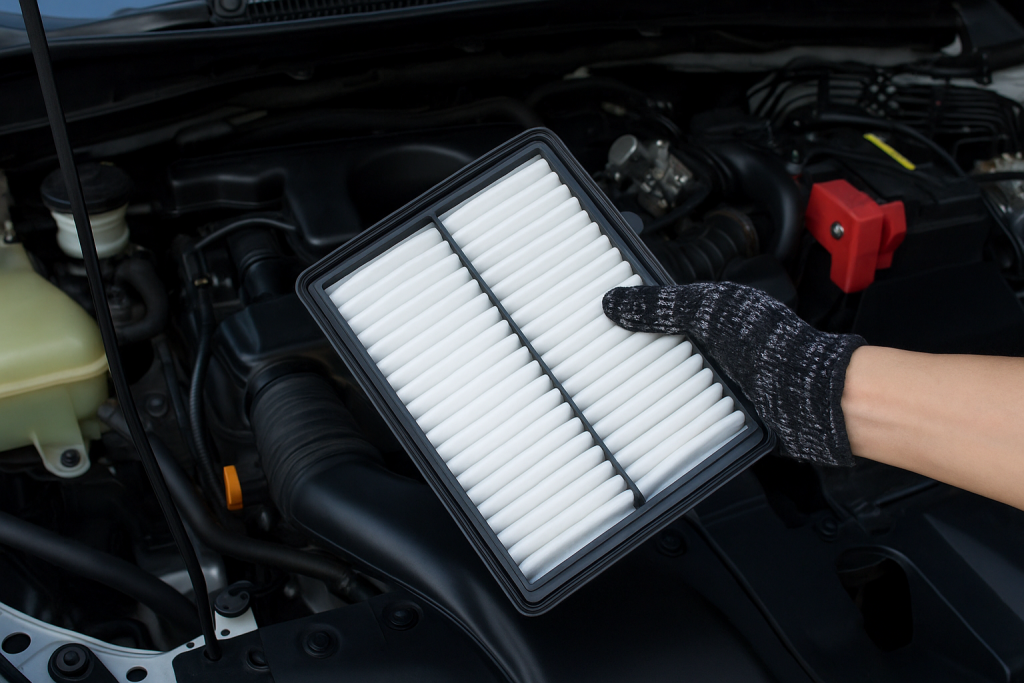
Air Filter: Your car’s air filter prevents dirt and debris from entering your engine, which can cause damage over time. A clogged air filter can reduce your car’s performance and fuel efficiency. During your filters & fluids service, your technician will inspect and replace your air filter if necessary. Change your air filter every 15,000 to 30,000 miles.
Cabin Air Filter: Your car’s cabin air filter refines the air entering your interior. A clean cabin air filter improves the air quality inside your vehicle and can prevent health problems caused by breathing in dirty air. During your filters & fluids service, your technician will inspect and replace your cabin air filter if necessary. Change your cabin air filter every 15,000 to 30,000 miles.
Regular filters & fluids service is critical to keeping your car running smoothly for years. Skipping or delaying this service can cause damage to your vehicle and leave you stranded on the side of the road. Check your car’s owner’s manual to see when your car’s filters and fluids need to be changed, and schedule an appointment today with your trusted auto repair shop. Taking care of your car’s filters and fluids will ensure it’s always smooth, safe, and reliable.
FAQs
1. Why is filters and fluids service important for my car?
Regular maintenance of fluids and filters keeps your vehicle running efficiently, extends its lifespan, and helps prevent costly breakdowns and repairs.
2. What fluids are checked or replaced during service?
Key fluids include:
- Engine oil
- Transmission fluid
- Brake fluid
- Coolant
- Power steering fluid (for vehicles that use it)
These are either topped off, checked for condition, or fully replaced as needed.
3. How often should I change my engine oil and filter?
Most vehicles should have the oil and oil filter changed every 3,000 to 5,000 miles, depending on the make, model, and driving conditions. Synthetic oils may last longer.
4. When should transmission fluid be changed?
Typically, every 30,000 to 60,000 miles, but always refer to your owner’s manual or ask your mechanic for your specific vehicle.
5. How often should brake fluid be replaced?
Brake fluid should generally be changed every 2 years, as it absorbs moisture over time, which can lead to brake failure.
6. What does an air filter do, and when should it be replaced?
The air filter prevents dust and debris from entering the engine. Replace it every 15,000 to 30,000 miles, or more frequently in dusty environments.
7. What is a cabin air filter, and why is it important?
A cabin air filter cleans the air entering the vehicle’s interior. It helps improve air quality and should be replaced every 15,000 to 30,000 miles.
8. What happens if I skip fluid or filter maintenance?
Neglecting this service can lead to:
- Reduced fuel efficiency
- Engine damage
- Poor braking performance
- Reduced HVAC system effectiveness
- Transmission issues
Ultimately, it could cause breakdowns or costly repairs.
9. Can dirty filters really affect my car’s performance?
Yes. A clogged air or oil filter can reduce engine efficiency, hurt gas mileage, and increase wear on engine components.
10. How do I know when my filters or fluids need attention?
Look for signs like:
- Poor fuel economy
- Strange engine noises
- Hard shifting
- Dirty or dark fluid on the dipstick
- HVAC airflow issues
Regular inspections by a mechanic will also catch these issues early.
11. Is fluid flush the same as a fluid change?
No. A fluid flush removes nearly all of the old fluid and debris using a machine, while a fluid change simply drains and replaces a portion of the fluid.
12. Can I use universal fluids instead of OEM-specified ones?
Always use the manufacturer-recommended fluids to ensure proper system performance and avoid voiding your warranty.
13. Do EVs (electric vehicles) need fluid and filter service?
Yes, though less frequently. EVs still use coolant, brake fluid, and cabin air filters that require routine maintenance.
14. How much does a filters & fluids service cost?
Costs vary, but basic services range from $60 to $250+, depending on what fluids and filters are being serviced and the vehicle type.
15. Can I check my car’s fluids myself?
Yes, you can check engine oil, coolant, and sometimes brake or power steering fluid. However, proper inspection and replacement should be done by a certified technician for accuracy and safety.
Share:
- Share on Facebook (Opens in new window) Facebook
- Share on X (Opens in new window) X
- Share on LinkedIn (Opens in new window) LinkedIn
- Share on Pinterest (Opens in new window) Pinterest
- Share on Threads (Opens in new window) Threads
- Share on Nextdoor (Opens in new window) Nextdoor
- Share on Reddit (Opens in new window) Reddit
- Share on Bluesky (Opens in new window) Bluesky
- Share on WhatsApp (Opens in new window) WhatsApp
- Share on Telegram (Opens in new window) Telegram
- Email a link to a friend (Opens in new window) Email